Free Cable Fingerless Gloves for Everyday Winter Layering
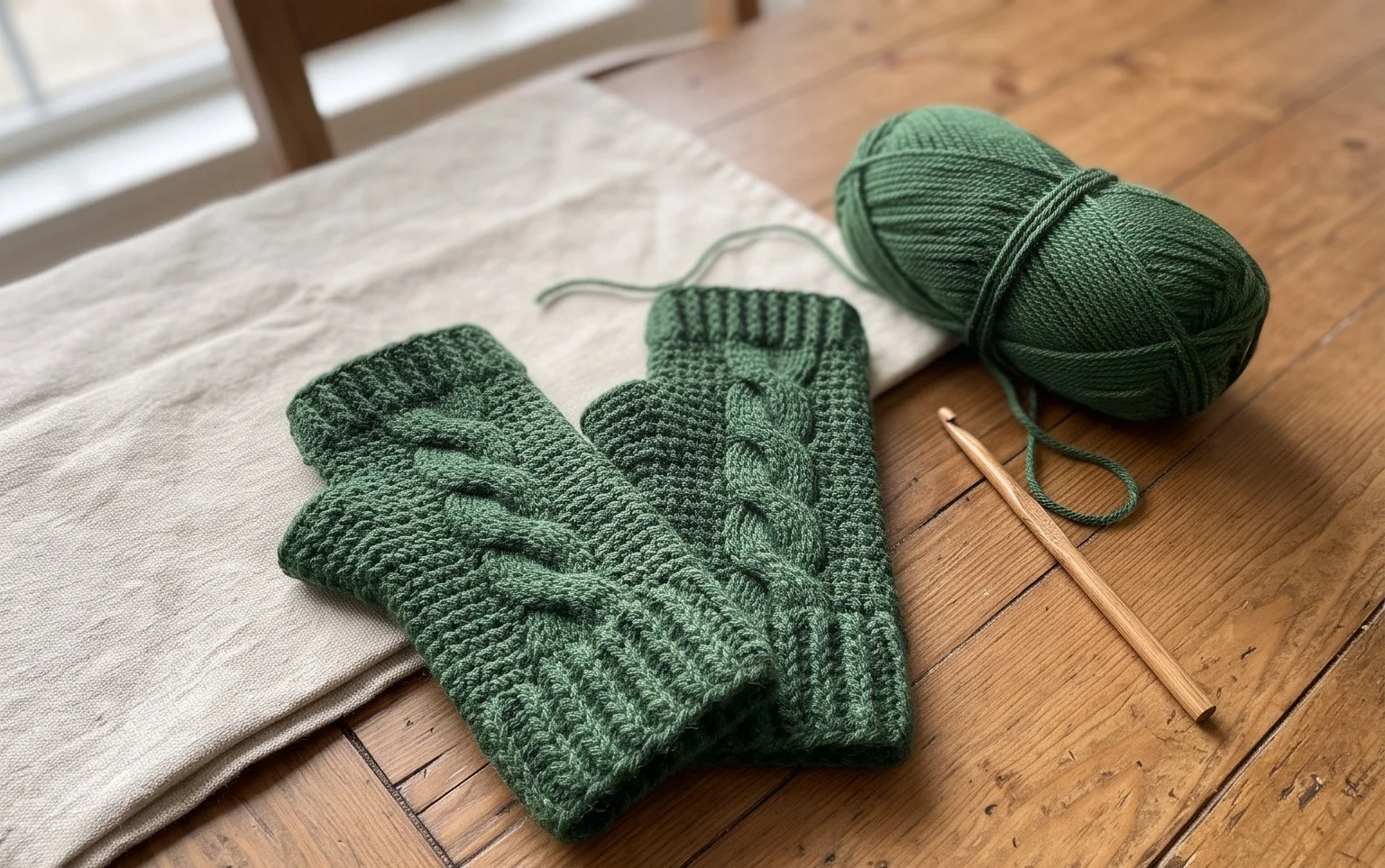
Raised crochet cables give these fingerless gloves a thick, rope-like texture that feels warm across the back of the hand while leaving your fingers free. They are handy for chilly mornings, reading by a drafty window, or keeping your hands warm while you work at a desk. The cable pattern makes a thoughtful handmade gift, and a confident beginner can take it on by working slowly and keeping track of each row. You’ll learn how front and back post stitches cross into a cable, along with how the glove is shaped around a simple thumb opening. The fabric has a satisfying spring to it, and watching the raised lines appear is a good reason to pick up your hook for a few quiet evenings. Choose a smooth yarn so the cable remains clear, and check your fit as you go.
Why You’ll Love This Pattern
This cotton crochet washcloth is a practical first project: it is a flat rectangle made with single crochet, so you can focus on even tension and counting without shaping or seams. The dense fabric feels sturdy in the hand and works well for washing dishes or wiping counters.
One washcloth takes about 50–75 yards of cotton yarn, making it useful for leftovers from larger projects. It is also easy to make a matching set; keep the same yarn and hook for consistent sizing, or use different colors to tell cloths apart.
I made one over an evening and liked how easy it was to keep the edges straight. The cotton feels firm enough for everyday dishes.
— Maya, beginner crocheter
Pattern Overview & Skill Level
- Skill Level: Beginner. You need to know how to chain and single crochet.
- Approximate Time: 1–2 hours, depending on your pace and tension.
- Construction: A flat rectangle worked in turned rows of single crochet, then finished with a simple yarn-end weave-in. No joining or sewing is required.
- Finished Dimensions & Sizing: About 7.5 × 6 inches (19 × 15 cm) when made to gauge. Small differences are normal for a hand-crocheted cloth.
Materials & Supplies Needed
- Yarn: About 50–75 yards of worsted-weight cotton yarn (#4), in one color. Cotton absorbs water and holds up well to frequent washing.
- Hook Size: 4.0 mm / G-6. Use the hook that gives you the gauge below; a smaller hook makes a firmer cloth, while a larger hook makes a looser fabric.
- Notions: Tapestry needle for weaving in the ends, scissors, and a ruler or tape measure. A stitch marker is optional for marking the first or last stitch.
- Substitutions: Use a similar-weight cotton or cotton blend and check the yarn label for care guidance. Acrylic is less absorbent and may feel different against dishes. Changing yarn weight or hook size will change the cloth’s size and texture.
Gauge: 16 single crochet stitches and 20 rows measure about 4 × 4 inches (10 × 10 cm) after a gentle wash and dry. Make a small swatch if matching the stated size matters; adjust your hook if your swatch is wider or narrower.
Stitch Guide & Abbreviations (US Terms)
- ch = chain.
- sc = single crochet: insert the hook in the stitch, yarn over and pull up a loop, yarn over and draw through both loops.
- st = stitch.
- sts = stitches.
- rep = repeat.
The turning chain at the start of each row does not count as a stitch. Work the first single crochet into the first stitch of the row, not into the turning chain. This keeps the stitch count at 30 and helps the sides stay straight.
Step-by-Step Pattern Instructions
Washcloth
Use the 4.0 mm hook and worsted-weight cotton. Keep your loops at a consistent height; pulling each loop too tight can make the cloth stiff and smaller than the stated dimensions.
- Foundation: Ch 31. Keep the chain relaxed so the first row does not pull into a curve.
- Row 1: Sc in the second ch from the hook and in each ch across. Turn. (30 sts)
- Row 2: Ch 1, sc in each st across, beginning in the first st. Turn. (30 sts)
- Rows 3–30: Rep Row 2 for 28 rows. Check occasionally that you have 30 stitches and that the fabric lies flat. (30 sts each row)
After Row 30, fasten off, leaving a tail about 6 inches (15 cm) long. Pull the tail through the loop on your hook. Thread it onto a tapestry needle and weave it through several stitches on the wrong side, changing direction once so it stays secure. Weave in the starting tail the same way. Trim the remaining yarn close without cutting into the fabric.
Lay the cloth flat and measure it. If it is slightly larger or smaller, that is fine for a washcloth; if it is noticeably off, check your gauge before making another one. A firm, even rectangle is more useful than forcing the edges to match an exact measurement.
Care & Washing Instructions
- Wash cotton in warm water, around 40°C (104°F), with similar colors; follow the yarn label if it gives different instructions.
- Air-dry flat or tumble-dry on low if the yarn label allows it; reshape the cloth while damp.
- Block lightly by smoothing the damp cloth into a rectangle; avoid stretching the edges out of shape.
Pro Tips & Common Mistakes to Avoid
- Keep your tension steady, especially along the foundation chain. If the first row is much tighter than the rest, try making the chain with a hook one size larger, then switch to the pattern hook for Row 1.
- Count all 30 stitches at the end of each row. A stitch marker in the first or last stitch can help prevent accidentally skipping the edge stitch when you turn.
- Weave each yarn end through the back of several stitches and change direction once. Do not pull the tail so tight that the fabric puckers.
- To make a wider or taller cloth, add foundation chains in an even number and work additional rows. More stitches and rows use more yarn; check the cloth’s width and length as you go.
Frequently Asked Questions
Can I use a different yarn fiber?
Yes. Cotton is recommended because it absorbs water and tolerates regular washing. A cotton blend can also work, but check its care label. Acrylic generally absorbs less and may feel slicker on dishes, and a different yarn weight will change the finished dimensions.
How can I make the washcloth larger or smaller?
For a wider cloth, chain more or fewer stitches, then work single crochet across each row. For a taller cloth, work more or fewer rows. Changing the stitch count or row count changes the amount of yarn needed, so keep an eye on your supply as you adjust the dimensions.
Is this pattern suitable for a first crochet project?
Yes. It uses only chains and single crochet in straight rows. The main challenge is noticing the first and last stitch on each row; count to 30 before turning so the rectangle does not gradually narrow or widen.
May I sell washcloths made from this pattern?
You can sell your finished work if the designer’s terms allow it. Check the applicable pattern or site terms, and do not claim someone else’s pattern as your own. The finished item is handmade, so small differences in size and appearance are expected.
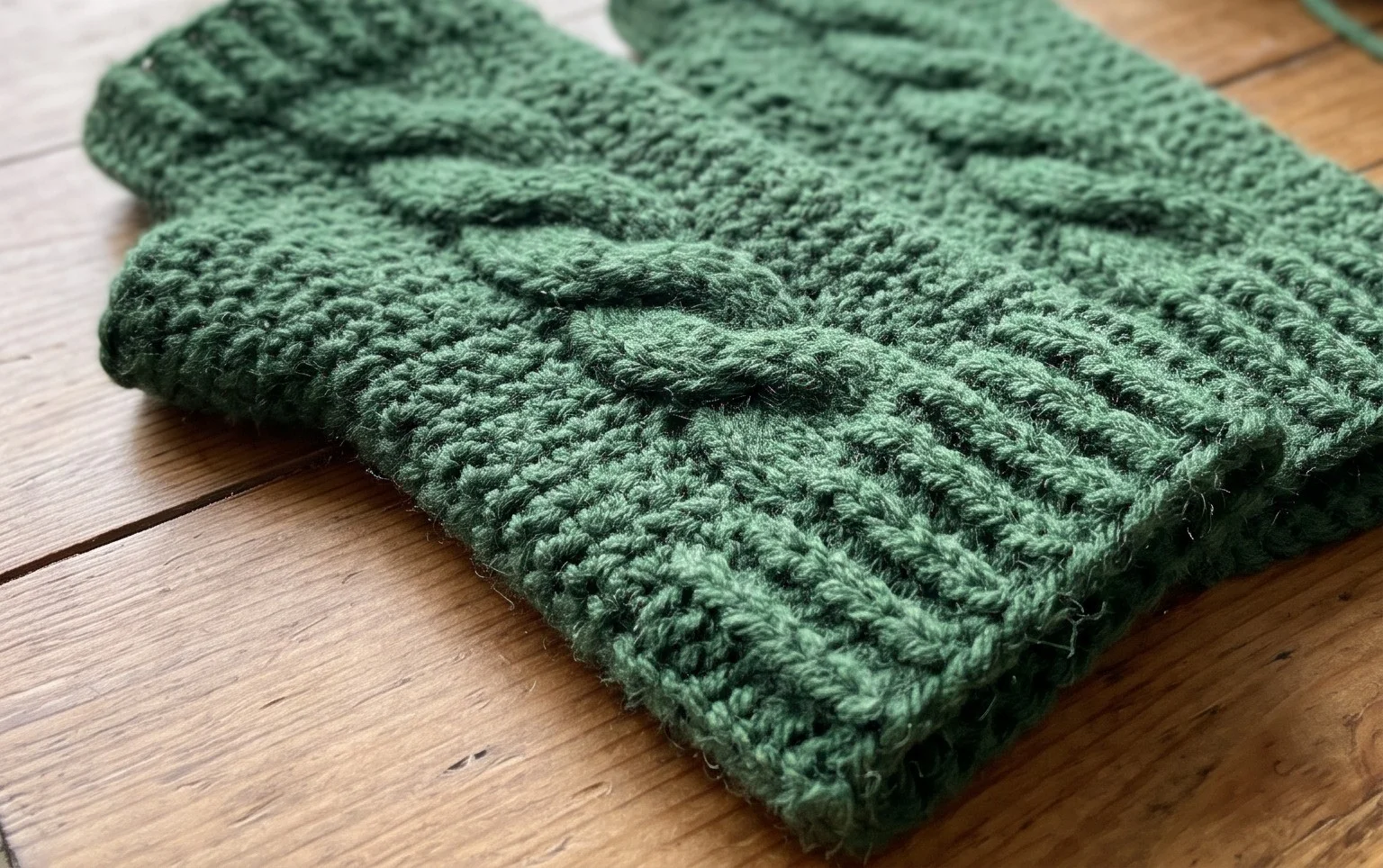
Once the last ends are woven in, you’ll have a pair of textured gloves that keep your palms covered while leaving your fingers ready to type, turn pages, or hold a warm mug. Try the pattern in a deep red or forest green, or adjust the length of the cuff to suit the wearer’s wrist. If you make a pair, share a photo on Pinterest or your favorite social media platform; seeing the colors and yarn choices others use is part of the fun. Then explore more free crochet patterns on the blog for your next small project, whether you have one evening or a whole weekend to crochet.