Easy Crochet Dishcloth Free Pattern for Christmas Gifts
A square of ridged cotton feels sturdy in your hand and softens after its first wash. This crochet dishcloth is a useful little project for the holiday season, whether you are learning to keep your edges even, making practical gifts, or adding a handmade touch to a kitchen. The simple shape works well in classic Christmas colors, though a quiet cream or green can stay out on the counter all winter. You will use single crochet and back-loop stitches to make the raised rows, with a repeat that is easy to follow between other holiday tasks. The pattern also covers yarn and hook choices, sizing, finishing, and care, so you can make a cloth that is ready to wrap or use as soon as it is dry.

Why You’ll Love This Pattern
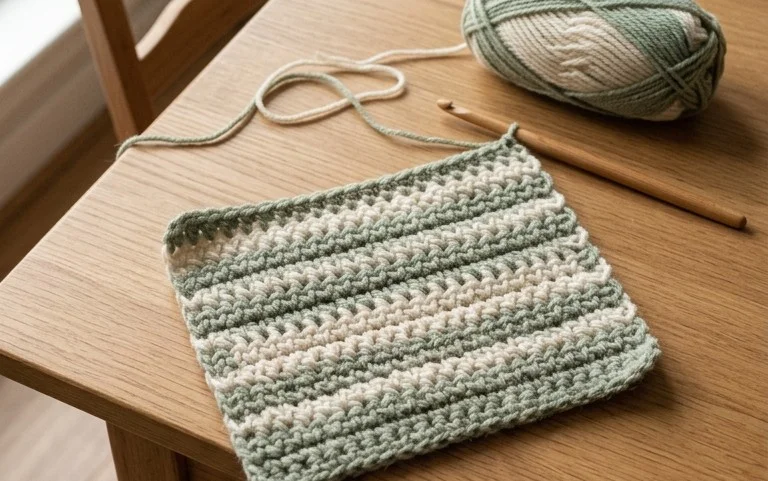
A firm cotton cloth with alternating flat and ridged rows is useful at the sink and simple to keep track of while you crochet. This dishcloth uses only single crochet, so it suits a newer crocheter who is ready to practice even edges and consistent tension. The short rows make it easy to work in small pockets of time, and one skein of worsted cotton is usually enough. Its square shape also makes it a practical handmade gift that can be folded and tied with a simple yarn bow.
The rows were easy to count, and the ridges gave the cloth a nice texture without making it hard to wash.
— Sample crocheter
Pattern Overview & Skill Level
- Skill Level: Beginner. You need to chain, single crochet, turn, and work into the back loop.
- Approximate Time: 2–3 hours, depending on your pace and how often you pause to count.
- Construction: Worked flat in back-and-forth rows from the lower edge upward. The ridged texture comes from alternating regular single crochet rows with rows worked in the back loop only.
- Finished Dimensions & Sizing: About 8.5 × 8.5 in (21.5 × 21.5 cm) after washing and drying flat, using the gauge below. Small differences in tension will change the finished measurements.
Materials & Supplies Needed
- Yarn: About 90–110 yd (82–101 m) of worsted-weight (#4) 100% cotton yarn in one color. Cotton absorbs water and tolerates frequent washing. A solid or lightly heathered shade makes the ridges easy to see.
- Hook: 5.0 mm / H-8 crochet hook. Check your gauge; change hook size if your fabric is much looser or tighter than the stated gauge.
- Notions: Tapestry needle for the starting and finishing tails, scissors, and a ruler or tape measure. A stitch marker is optional for marking the first stitch of each row.
- Gauge: 14 single crochet stitches and 16 rows measure about 4 × 4 in (10 × 10 cm) in the pattern fabric after washing and drying flat.
- Substitutions: A different worsted-weight cotton can be used, but compare the label and make a gauge swatch because yarns with the same weight can produce different fabrics. Cotton-linen blends may feel firmer, while acrylic can be less absorbent and may stretch differently. A different yarn weight changes the cloth’s size and texture, so use a hook suited to that yarn and expect to adjust the finished dimensions.
Stitch Guide & Abbreviations (US Terms)
- ch = chain.
- sc = single crochet. Insert the hook into the indicated stitch, yarn over and pull up a loop, then yarn over and pull through both loops on the hook.
- BLO = back loop only. Work into the loop farthest from you at the top of the stitch. This leaves a raised ridge on the other side of the fabric.
- st = stitch.
The turning chain does not count as a stitch. Work the first single crochet of each row into the first stitch, not into the turning chain.
Step-by-Step Pattern Instructions
Dishcloth
Use the 5.0 mm hook and worsted-weight cotton. The pattern begins with 30 stitches in each row. Keep the same number of stitches throughout; do not add a stitch in the turning chain.
- Foundation: Ch 31.
- Row 1: Sc in the second ch from the hook and in each ch across. Turn. (30 sts)
- Row 2: Ch 1, sc in each st across. Turn. (30 sts)
- Row 3: Ch 1, sc in the BLO of each st across. Turn. (30 sts)
- Rows 4–33: Repeat Rows 2 and 3 fifteen times, alternating one regular sc row with one BLO row. Turn after each row. (30 sts per row)
- Row 34: Ch 1, sc in each st across. Fasten off, leaving a tail about 6 in (15 cm) long. (30 sts)
Finishing
Thread the tail onto a tapestry needle. Weave it through several stitches on the wrong side, change direction, and weave through a few more stitches so it stays secure. Repeat with the starting tail. Avoid pulling the woven ends tightly, which can pucker the edge. Wash the cloth according to the yarn label, then lay it flat and gently square the corners while it dries.
If your edges look uneven, count the stitches before starting the next row. Each row should have 30 single crochet stitches, and the turning chain should remain separate from the stitch count.
Care & Washing Instructions
- For cotton yarn, wash with like colors in warm water, up to 40°C (104°F), unless the yarn label recommends a cooler temperature.
- Dry flat to help the cloth keep its square shape; reshape the edges while damp rather than stretching the fabric.
- Block lightly by smoothing the ridges and corners into place. If your yarn fiber is different or unknown, follow the care instructions on its label.
Pro Tips & Common Mistakes to Avoid
- Keep your tension relaxed but even. If the cloth feels stiff or the hook is difficult to insert, try a larger hook; if the fabric has large gaps, try a smaller one and recheck your gauge.
- Count 30 stitches at the end of every row. Place a marker in the first stitch if you tend to work into the turning chain by mistake, and move it up as you go.
- Weave in each end on the wrong side, changing direction once or twice. A short, tight weave can pull free after repeated washing, while a long exposed tail can show through the fabric.
- For a larger cloth, add stitches in the foundation chain and work more rows to keep it close to square. Each additional foundation chain adds roughly 1/14 in to the width at the stated gauge; more stitches and rows also use more yarn, so allow extra yardage.
Frequently Asked Questions
Can I use a different yarn fiber for this dishcloth?
Yes, but the fabric may behave differently. Cotton is absorbent and holds up well to regular washing. Acrylic is less absorbent, and a cotton-linen blend may feel firmer. Make a swatch and follow the care directions for the yarn you choose.
How can I make the finished cloth larger or smaller?
Change the foundation chain to adjust the width, then work more or fewer rows to match the new width. Keep the turning chain out of the stitch count and check the fabric with a ruler. A larger cloth takes more yarn, while a smaller one uses less.
Is this dishcloth suitable for a first crochet project?
It can be a good first project if you can make a chain and single crochet. The main challenge is keeping 30 stitches in every row. Count regularly, especially at the row ends, so the sides do not gradually narrow or widen.
May I sell dishcloths made from this pattern?
Check the designer’s terms before selling finished items, and follow any rules they set for credit or small-scale sales. Do not claim the pattern itself as your own. If you sell the cloth, describe the fiber accurately and include its care instructions.
A finished dishcloth has a satisfying weight, clear ridges, and a practical place beside the sink, which makes it a welcome handmade gift during the holidays. For a simple variation, work the same pattern in alternating red and cream rows, changing colors at the ends of rows for a striped effect. If you make one, share a photo on Pinterest or your favorite social platform so other crocheters can see how your colors turned out. Then browse the blog for more free crochet patterns, including small projects that fit into a busy holiday schedule.