Easy Granny Crochet Bandana: Free Pattern & Tutorial
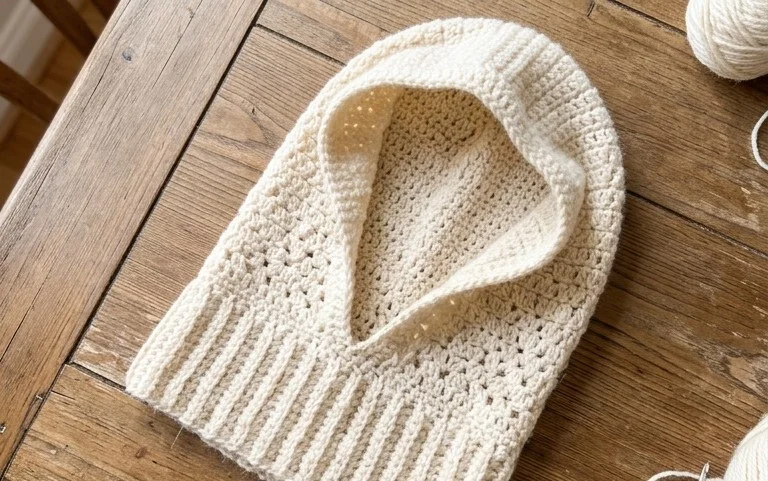
This triangle accessory rests lightly against your hair, offering a simple way to keep bangs out of your eyes during breezy walks or messy kitchen sessions. Crafted from a single square that folds into a distinct shape, this piece feels soft and breathable because of the gaps between the clusters. Beginners will enjoy how quickly the repetitive rounds grow into a finished accessory, while experienced makers can experiment with adding fringe or varying the size for different head shapes. You will learn the classic cluster technique used to build the piece from the center outward using basic double crochets.
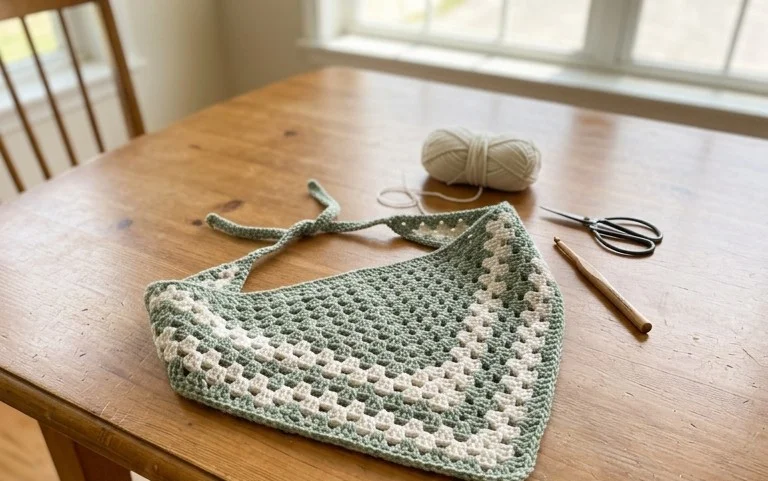
Why Crocheters Love It
The Classic Granny Square Dishcloth is a foundational project that teaches the essential rhythm of cluster-based crochet. It works up in under an hour, making it an ideal choice for testing new yarn colors or clearing out small leftovers from your stash. Because it uses a simple combination of double crochet stitches and chain spaces, the fabric remains breathable and absorbent, which is exactly what you need for kitchen cleanup. Its modular nature allows you to scale the size easily, whether you want a small face scrubby or a larger drying mat.
I finally mastered the center-out square method with this pattern, and now I have a stack of these in every color of my kitchen decor.
— Sarah, home crafter
Pattern Overview & Skill Level
- Skill Level: Beginner
- Approximate Time: 45 to 60 minutes
- Construction: Worked in rounds from the center outward
- Finished Dimensions: 8 inches by 8 inches
Materials & Supplies Needed
- Yarn: Worsted weight (#4), 100% cotton yarn, approximately 45 yards per dishcloth. Cotton is necessary for heat resistance and absorbency.
- Hook Size: 5.0 mm (H-8) aluminum hook.
- Notions: Yarn needle for weaving ends and scissors.
- Safe yarn substitutions: You may use a cotton-linen blend for increased durability, though this may make the fabric slightly stiffer. Avoid acrylic yarns, as they are not absorbent and will melt if they come into contact with a hot pan.
Stitch Guide & Abbreviations (US Terms)
- ch = chain
- st/sts = stitch/stitches
- sl st = slip stitch
- dc = double crochet
- sp = space
- Cluster = 3 dc worked into the same space
Step-by-Step Pattern Instructions
Main Dishcloth
- Rnd 1: Ch 4, sl st to the first ch to form a ring. Ch 3 (counts as first dc), work 2 dc into the ring, ch 2, 3 dc into ring, ch 2 3 times. Join with a sl st to the top of the beginning ch-3. (12 dc, 4 ch-2 spaces)
- Rnd 2: Sl st into the next dc and into the first ch-2 corner space. Ch 3, (2 dc, ch 2, 3 dc) in the same corner space. Ch 1, skip 3 sts, (3 dc, ch 2, 3 dc) in the next corner space. Repeat from * to * two more times. Ch 1, skip 3 sts, join with a sl st to the top of the beginning ch-3. (24 dc, 4 ch-1 spaces, 4 ch-2 spaces)
- Rnd 3: Sl st into the next 2 dc and into the corner space. Ch 3, (2 dc, ch 2, 3 dc) in the same space. Ch 1, 3 dc in the next ch-1 space, ch 1, (3 dc, ch 2, 3 dc) in the next corner space. Repeat from * to * two more times. Ch 1, 3 dc in the last ch-1 space, ch 1, join with a sl st to the top of the beginning ch-3. (36 dc)
- Rnd 4 to 8: Continue the established pattern. In each corner space, work (3 dc, ch 2, 3 dc). In every ch-1 space along the sides, work 3 dc. Ensure you chain 1 between all clusters. Each round increases by 12 stitches. (Round 8 will have 84 dc).
- Finishing: Fasten off, leaving a 6-inch tail. Pull the yarn through the final loop and use your tapestry needle to weave the end back and forth through the stitches on the back side of the square.
Care & Washing Instructions
- Machine wash in warm water on a gentle cycle to preserve the fiber integrity of the cotton.
- Tumble dry on low heat or lay flat on a clean towel to air dry to prevent shrinkage.
- Reshape the square by pulling gently on the corners while the item is still damp.
Pro Tips & Common Mistakes to Avoid
Maintain consistent tension throughout the project by keeping your yarn tension steady in your non-dominant hand; if your corners start to ripple, your hook may be too large for your natural tension. Always place a removable stitch marker in the first chain of your beginning ch-3 to avoid losing track of the round start. Weave your ends in multiple directions—horizontally and then vertically—to ensure they do not pull out after repeated trips through the washing machine. If you wish to make the cloth larger, simply continue the pattern for more rounds, keeping in mind that each additional round will consume approximately 10 additional yards of yarn.
Frequently Asked Questions
Can I use a larger hook to make this faster?
Yes, using a larger hook will make the dishcloth grow faster and create a looser, more porous fabric. However, it will use more yarn and may be less effective for scrubbing stubborn stuck-on food.
Is this pattern suitable for complete beginners?
This is an excellent project for beginners because it focuses on the double crochet stitch and introduces working into chain spaces. It requires no complex counting once you understand the corner increases.
Can I sell the dishcloths I make from this pattern?
You are welcome to sell finished items made from this pattern, provided you credit the designer. Please do not sell or redistribute the text of the pattern itself.
Why is my square curling instead of laying flat?
Curling usually indicates your stitches are too tight or you are missing the chain stitches between the clusters. Ensure you are working into the ch-2 corner spaces clearly and not accidentally skipping the side ch-1 spaces.
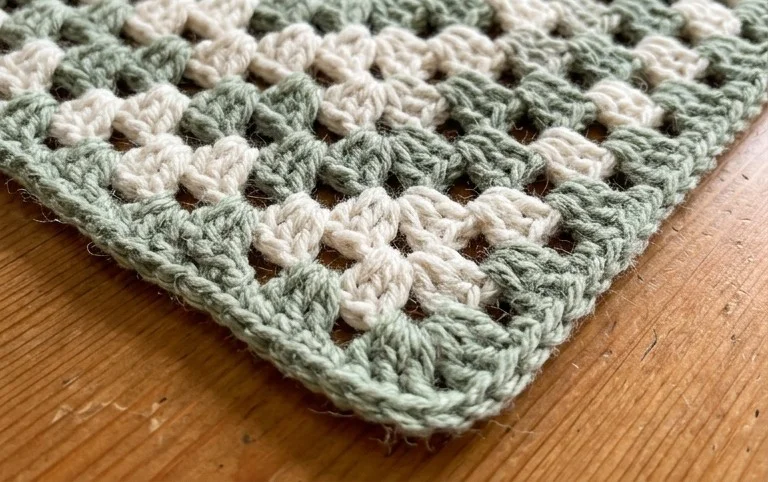
Seeing your handmade accessory finished is rewarding, especially when you wear it out on a sunny day. If you want a different look, try using a variegated cotton yarn to create automatic stripes or add a long braided tie at the corners for extra security. Sharing a photo of your work on Instagram helps others see how your color choices turn out. Feel free to browse the rest of the blog for more free patterns to fill your next afternoon project time with more yarn crafts.