Easy Christmas Striped Blanket Crochet Free Pattern
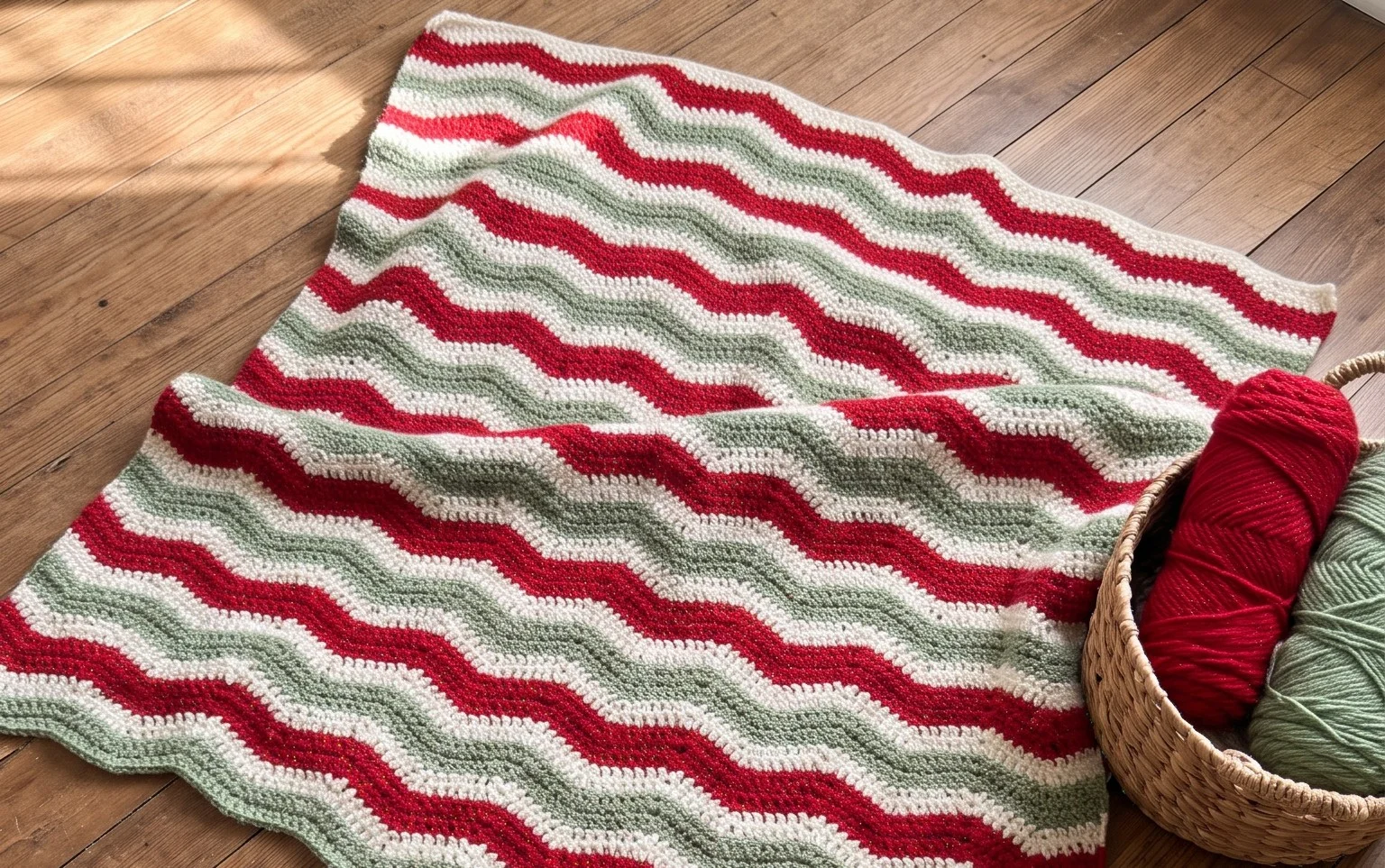
Rows of red, green, and cream give this Christmas blanket the familiar look of a cozy holiday lane, while the finished fabric feels warm and soft across a sofa or reading chair. The stripes bring seasonal color without asking you to manage a complicated motif, so this project suits newer crocheters who are ready to work a larger piece as well as experienced makers planning handmade gifts. You can settle into the repeating rows and watch the blanket grow one color band at a time. In the pattern, you’ll find guidance for keeping stripe changes tidy, maintaining an even edge, and adjusting the blanket to suit your space. Choose classic Christmas shades or adapt the palette to match your home, then enjoy a practical project you can bring out each winter.
Why You’ll Love This Pattern
This cotton dishcloth uses a simple mesh-like linen stitch, so it has a firm texture that can scrub dishes without feeling rough in your hand. The repeated single crochet and chain spaces are easy to follow once the first row is complete.
The square shape works well for a beginner practice piece, and one cloth takes about 75–100 yards of worsted-weight cotton. Make it in one color to keep the stitching easy to see, or use a cotton yarn with short color changes for stripes without adding extra steps.
The stitch repeat was easy to remember, and the cotton cloth came out sturdy enough for everyday washing.
— Mia, sample maker
Pattern Overview & Skill Level
- Skill Level: Beginner. You should know how to chain and single crochet.
- Approximate Time: 2–3 hours, depending on your pace and tension.
- Construction: A flat square worked back and forth in rows, then finished with a border worked around the outside edge.
- Finished Dimensions & Sizing: Approximately 8 × 8 in (20 × 20 cm), including the border. The size may vary with yarn, hook, and tension.
Materials & Supplies Needed
- Yarn: About 75–100 yd (69–91 m) of worsted-weight (#4) 100% cotton yarn. One color is enough; a second color can be used for the border.
- Hook: 5.0 mm / H-8 crochet hook. Use the hook that gives you a firm fabric without making the stitches difficult to work.
- Notions: Tapestry needle, scissors, and a ruler or measuring tape. A stitch marker is optional for marking the first corner stitch during the border.
- Substitutions: Cotton-linen yarn can make a slightly drapier cloth. Cotton blends are also suitable if the yarn label allows regular washing. Avoid acrylic for a dishcloth intended to absorb water; changing yarn weight will alter the size and may require a different hook.
Stitch Guide & Abbreviations (US Terms)
- ch = chain.
- sc = single crochet.
- sl st = slip stitch.
- st / sts = stitch / stitches.
- ch-1 sp = chain-1 space made by chaining 1 in the previous row.
- Linen stitch = a repeat of single crochet worked into a chain space, followed by a chain 1. The skipped stitch or space below creates the open texture.
Step-by-Step Pattern Instructions
Do not count turning chains as stitches. The body is worked in rows. Each row has 16 single crochets and 15 chain-1 spaces, for 31 stitch positions across.
Dishcloth Body
- Row 1: Ch 32. Sc in the second ch from the hook, *ch 1, skip the next ch, sc in the next ch; repeat from * across. (16 sc, 15 ch-1 sps; 31 positions)
- Row 2: Ch 1, turn. Sc in the first sc, *ch 1, sc in the next ch-1 sp; repeat from * across, ending with a sc in the final sc. (16 sc, 15 ch-1 sps; 31 positions)
- Rows 3–30: Repeat Row 2. At the end of Row 30, do not fasten off. (16 sc, 15 ch-1 sps; 31 positions)
Check the piece after Row 10 and again after Row 20. It should be close to square. If it is noticeably wider than it is tall, continue until the height matches the width before starting the border; the final row count may vary with your gauge.
Border
- Border Round 1: Ch 1, then work sc evenly around the cloth. Place 3 sc in each corner. Along the top and bottom, work 1 sc in each sc and 1 sc in each ch-1 space. Along each side, space the sc evenly, aiming for about 30 sc per side. Sl st to the first sc to join. (About 124 sc, including corner stitches; exact count may vary with side spacing)
- Border Round 2: Ch 1. Sc in each sc around, working 3 sc in the center sc of each corner group. Sl st to the first sc to join. (About 132 sc; 2 additional sts at each of 4 corners)
Fasten off, leaving a short tail. Thread the tail onto a tapestry needle and weave it through several stitches on the wrong side. If the side edge looks wavy, remove the border and space the side stitches more evenly. If it pulls inward, add a few more sc along each side.
Care & Washing Instructions
- Wash cotton in warm water, up to 40°C (104°F), unless the yarn label gives a lower limit.
- Lay flat to dry, or tumble dry on low only if the yarn label permits it.
- While damp, reshape the cloth by hand and smooth the corners; blocking is optional for this everyday item.
Pro Tips & Common Mistakes to Avoid
- Keep the chain spaces loose enough to fit the hook through comfortably. Tight chain spaces make the next row slow and can pull the fabric narrower.
- Count the 16 single crochets at the end of each row. It is easy to miss the final stitch when it sits at the edge beside the turning chain.
- For the border, place a stitch marker in the first sc of the round. This makes the joining point easier to find and helps prevent an extra stitch at the end.
- To make a larger cloth, add an even number of chains to the foundation and work more rows to keep it square. A wider or longer cloth uses more yarn; a smaller hook makes a denser fabric and may also increase yarn use.
Frequently Asked Questions
Can I use a different yarn fiber?
For a dishcloth, cotton is a dependable choice because it absorbs water and tolerates frequent washing. Cotton-linen yarn can work as well, though it may feel stiffer before washing. Check the yarn label before substituting and expect the finished size and texture to change.
How can I make the dishcloth smaller or larger?
For a smaller cloth, begin with fewer chains in an even number, then work fewer rows. For a larger one, add chains and rows, keeping the foundation even so the linen-stitch repeat stays balanced. Measure as you go because yarn and tension affect the dimensions.
Is this pattern suitable for a first crochet project?
Yes, if you can chain and single crochet. The first row needs careful counting because it establishes the chain spaces. After that, work each single crochet into the chain space below and count 16 single crochets per row.
May I sell dishcloths made from this pattern?
Check the designer’s terms before selling finished items. If you sell your work, describe it accurately and do not claim the written pattern as your own. Care labels are useful because buyers may wash cotton cloths frequently.
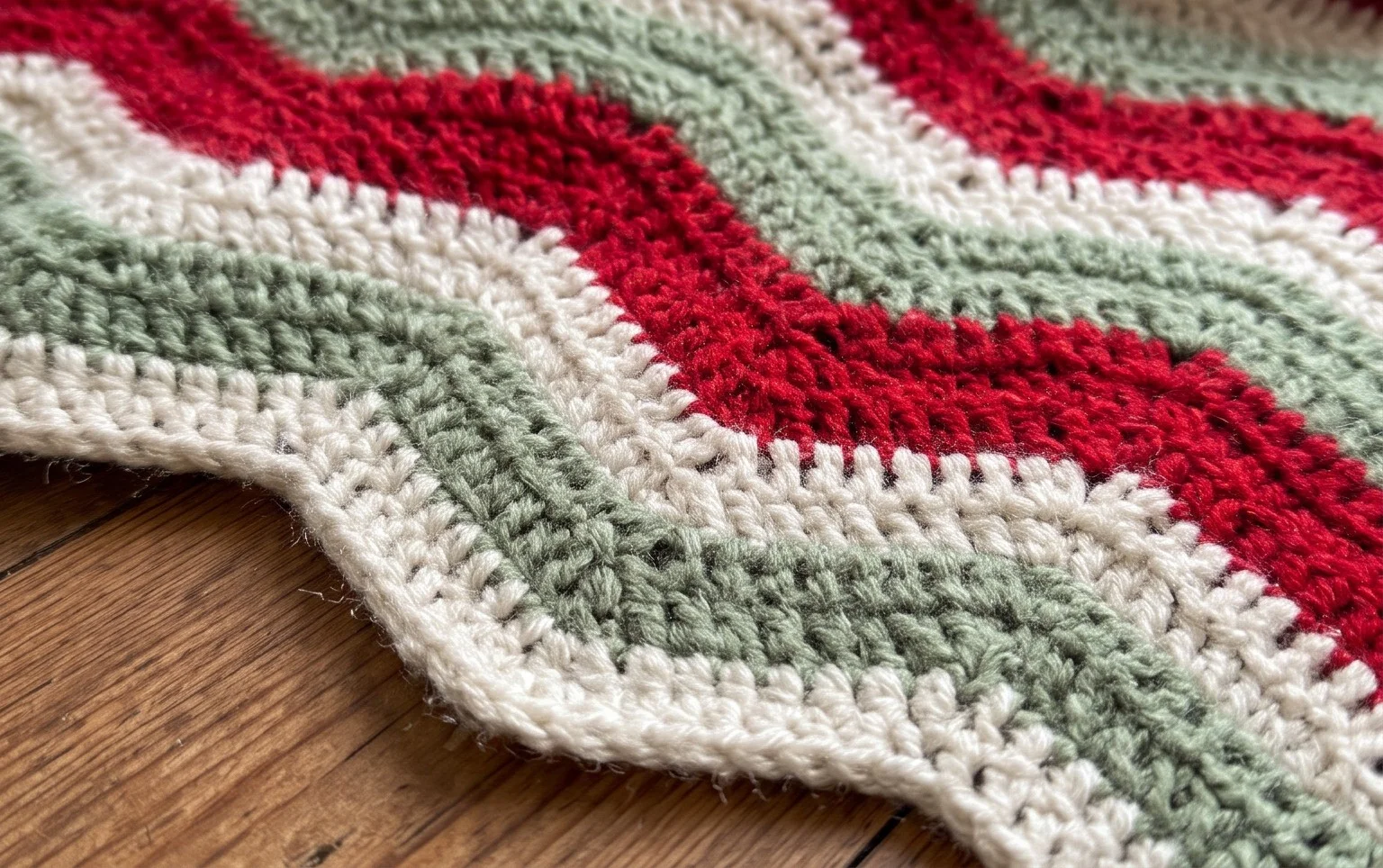
Once the last stripe is finished and the ends are woven in, you’ll have a cozy holiday blanket with color that makes a sofa or favorite chair feel ready for winter. For a simple variation, make the blanket wider or longer by adding stitches or repeating the stripe sequence, keeping the same yarn weight and hook so the fabric stays consistent. You could also swap the traditional red and green for shades that suit your room. Share a photo of your finished blanket on Pinterest or your favorite social media platform; seeing the color combinations others choose is part of the fun. When you’re ready for another project, explore more free crochet patterns on the blog.